Douglas College is building its first-ever student housing and academic expansion at 808 Royal Ave. in New Westminster. This 20-storey building will feature 368 student beds alongside modern classrooms, labs and collaborative spaces, creating an integrated environment where students can live, learn and thrive.
Learn about student housing
FAQ
Douglas College has grown significantly over the years and currently operates over capacity at the New Westminster Campus. At the same time, students face increasing challenges finding housing in a highly competitive rental market. This project responds to both needs by expanding academic space and introducing the College's first-ever student housing while helping reduce pressure on the local rental market.
The housing floors will feature a mix of room types including:
Traditional single rooms: A private bedroom with one bed. Students share a community bathroom, kitchen and lounge with other students on the floor.
Connected single rooms: A private bedroom with one bed. The room connects directly to the adjacent room through a shared bathroom used by only two students. Students also share the floor's kitchen and lounge.
Shared four-bedroom suites: A private bedroom inside a larger apartment. Four students share the suite, which includes exactly two bathrooms, one kitchen and a living room.
All room types will include accessible options.
Complete floorplans and room layouts will be available closer to project completion.
In addition to academic space on lower floors, you’ll have access to collaboration spaces, study and leisure spaces, laundry facilities, a main entrance foyer with a planned on-site food marketplace, indoor bicycle storage and outdoor spaces. You’re also across the street from everything at the existing New Westminster Campus including the fitness centre, library, theatre, food services, student services and more.
The building is expected to meet BC Energy and Zero Carbon Step Code 4 certification, which is the highest step in the code for commercial buildings. It is designed to operate without fossil fuels for heating and cooling through a fully electrified mechanical system, and will also target Leadership in Energy and Environmental Design (LEED) Gold certification.
Construction began in late 2023 and is progressing well. We anticipate completion in late 2027, with student housing projected to open in early 2028. Opening timelines will be confirmed as the project progresses.
The student housing will be available to both domestic and international Douglas College students. Eligibility and application details will be updated as decisions are finalized.
Affordability is a key factor in determining room rates at Douglas College.
Housing fees will provide students with a predictable cost that includes their furnished room, utilities, high-speed Wi-Fi, secure access, 24/7 security and emergency support and access to housing amenities and programming.
Room rates and payment details are still being finalized. Once rates are confirmed, Douglas College will share fee information to help students understand the costs and compare their housing options.
Yes. The building is just steps away from the New Westminster SkyTrain station. It also connects to the new 1.2-kilometre Agnes Greenway to support walking, wheeling and cycling. The building will provide 105 long-term and 18 short-term bicycle parking spaces, as well as off-street vehicle parking stalls. EV charging stations will also be available.
The provincial government provided the school with $202.3 million to support the $292.5-million project, with Douglas College providing the remaining $90.2 million.
News and updates
February 29, 2024
Historic project brings student housing to Douglas College
August 23, 2022
Douglas College to build first-ever student housing and new academic building
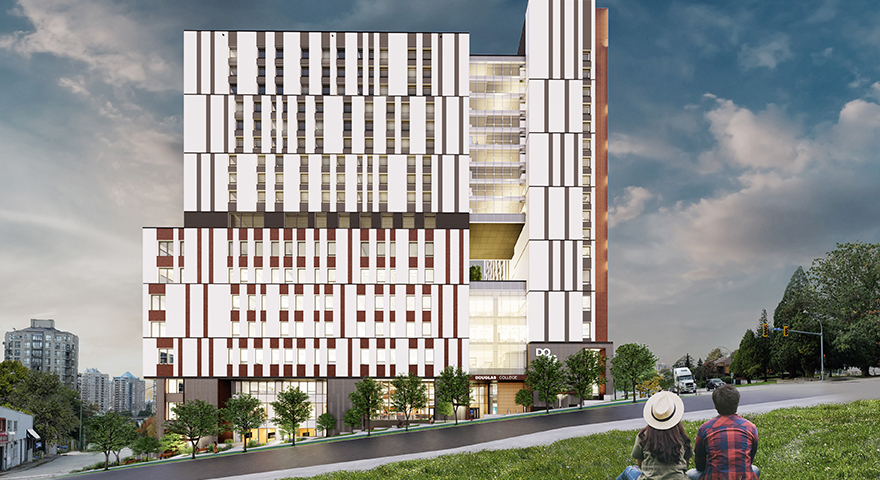
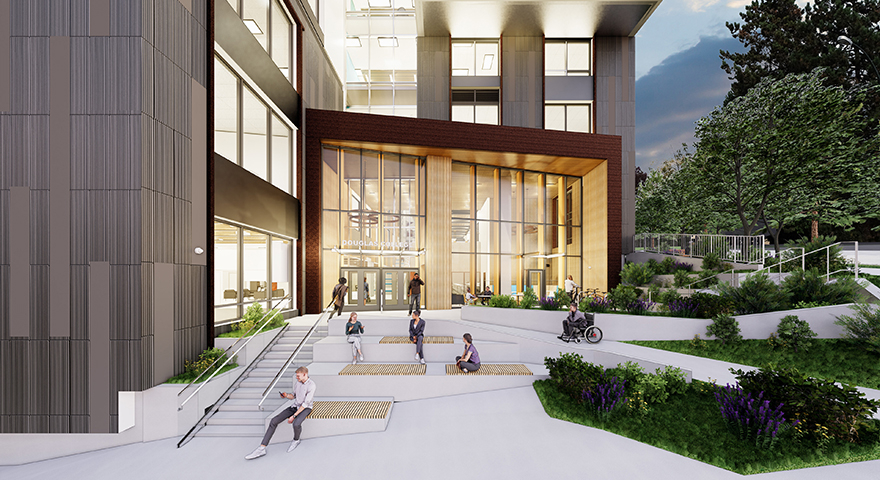
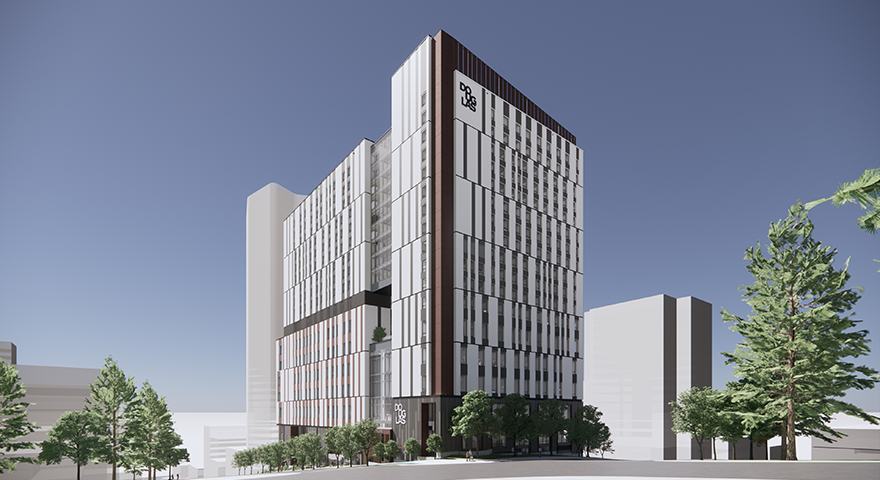
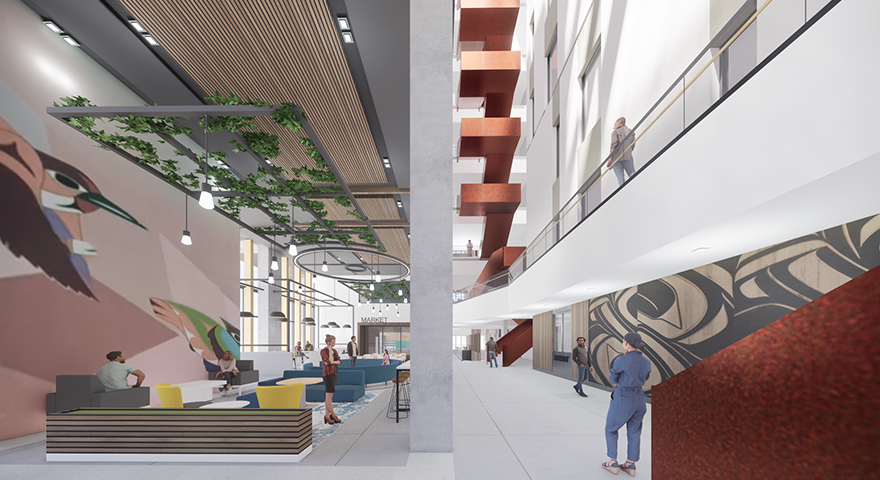
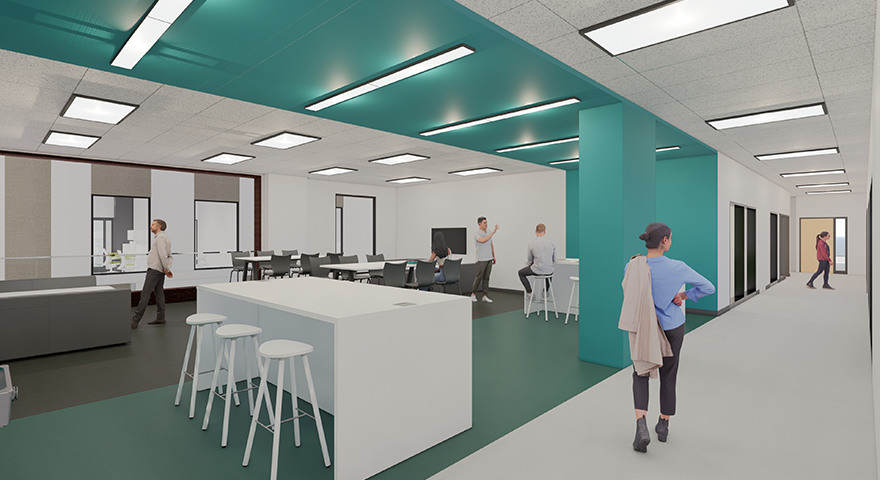
With 368 beds across nine storeys of student housing, eight storeys of state-of-the-art classrooms, labs and collaborative spaces and three shared-use storeys with housing on one side and academic space on the other, the development will create an integrated community where a new generation of Douglas students can live, learn and thrive.
As the largest campus expansion in Douglas College's history, 808 Royal is the culmination of years of vision, internal collaboration and strong partnership with the Province of British Columbia and the City of New Westminster. This unique building meets the academic and housing needs of the College’s growing student population, eases pressure on the competitive local rental market, reduces commute times and emissions and transitions Douglas College into a vibrant living-learning community.
We know housing on campus is more than just a place to sleep and study; it is a place for students to build community, feel connected and be supported while balancing academics, work and life. Living where they learn allows students to fully immerse themselves in the college experience, supporting mental wellness, social integration and academic success.
Project benefits
Studies show that students who live where they study have higher GPAs, retention rates and graduation rates. This sets them up for future career success.
Expands access to modern classrooms, computer labs, quiet study areas, collaborative breakout spaces and specialized learning environments under one roof.
Lowers overall living costs by eliminating daily transit and parking fees; bundling furnishings, utilities, Wi-Fi and amenities into one predictable rate and offering a stable alternative to the competitive local rental market.
Access to supportive living spaces, campus fitness facilities and social integration directly contributes to better mental health and reduced stress.
Provides a safe, supportive living environment with 24/7 on-site security, secure entry systems and housing staff – including a live-in Housing Manager and student Community Assistants – who will provide support and assistance to students.
Students live and study in a modern, zero-carbon facility powered without fossil fuels, featuring naturally lit spaces and outdoor spaces. This also leads to reduced commute times, traffic and emissions.