Governance at Douglas College provides the framework for how decisions are made, how responsibilities are shared and how we stay accountable to students, government and our community. It supports transparency, leadership and the long-term success of the institution.
The President and CEO of Douglas College
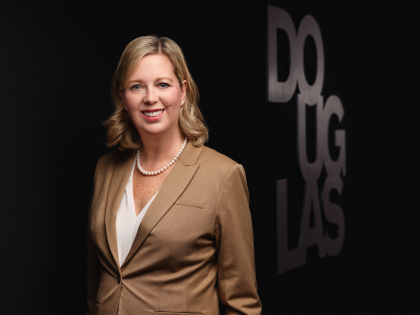
Dr. Kathy Denton has worked at Douglas since 1993, first as a faculty member, then in a sequence of administrative positions: Chair of Psychology, Dean of Humanities and Social Sciences, Vice President Academic and Provost.
Contact the President's Office
Devon Smith
Executive Assistant, President and College Board
Phone
604 527 5520
Email
dsmith93@douglascollege.ca
Mailing address
Douglas College
700 Royal Avenue
PO Box 2503
New Westminster, B.C.
V3L 5B2
College Board
The role of the Douglas College Board
The Douglas College Board acts on behalf of the public and oversees the affairs - including property, revenue and expenditures - of the College, performing functions consistent with the College and Institute Act which the Board considers advisable for the proper administration and advancement of the College.
Contact the College Board
Please address all communications to Board members and/or the Board Chair care of Devon Smith, as follows.
Email
dsmith93@douglascollege.ca
Phone
604 527 5520
Mailing address
Devon Smith, Executive Assistant, College and Board Governance
Douglas College Board Office
PO Box 2503
New Westminster, B.C.
V3L 5B2
Government Mandate Letter
The Mandate Letter and predecessor GLEs reflect agreements between the Government of British Columbia and Douglas College, represented by the College Board. They reflect both parties' respective accountabilities, roles and responsibilities.
Interested in attending a Board meeting?
College students, employees and the public are welcome at all open session meetings of the College Board.
Guests are asked to record their names on sign-in sheets, as all attendees' names are recorded in meeting minutes.
Policies
Clear expectations for a stronger community
Our policies set clear expectations to ensure safety, fairness and accountability across the Douglas College community. They protect everyone’s rights and help create a respectful, effective learning environment.
Code of Conduct
At Douglas College, how we work matters as much as what we do. A Code of Conduct provides shared expectations that reflect our commitment to integrity, equity and respect, helping everyone contribute to a welcoming and inclusive learning environment.
Vice President's Academic Council (VPAC)
VPAC at a glance
- The VPAC is the College's education or academic administration body.
- It consists of the Vice President, Academic and Provost and the six Deans.
- The Chair is the Vice President Academic and Provost, Dr. Manuela Costantino.
- The VPAC meetings are typically held every second Wednesday from September to June.
Contact the VPAC
Vice President, Academic and Provost
Dr. Manuela Costantino
Phone
604 527 5222
Email
costantinom@douglascollege.ca
Executive Assistant to the VP Academic and Provost
Sally Patterson
Phone
604 527 5491
Education Council
Education Council at a glance
As the College’s main academic decision-making body, the Education Council reviews curriculum, academic standards and policy to ensure Douglas delivers meaningful, accessible and high-quality education for all learners.
Contact the Education Council
Records Management, Privacy and Archives
Douglas College recognizes that records created, or received, and maintained by the College contain information essential to the organization's mission, long-term goals and ongoing operations.
Records provide evidence of the College's activities. Classification and retention schedules ensure the College is compliant with government regulations. The College's records require systematic management based on standardized policies and procedures.
Records Management establishes and supports classification, retention and disposition of records. It also provides procedures and advice relating to the management of records in any format.